We have entered 2025 with new municipal administrations inaugurated—and preparations for COP30, set to take place in Brazil, advancing at full steam, shining a spotlight on the climate, environmental, and sustainability agendas.
International studies have demonstrated that solid waste management, despite contributing little to total greenhouse gas emissions, offers significant potential for emissions mitigation, particularly methane, provided that proper practices are in place.
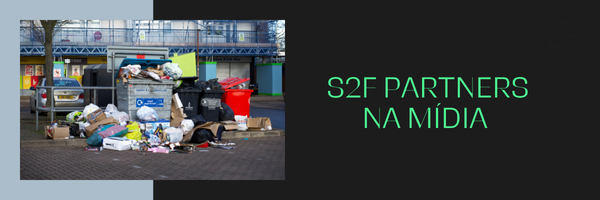
However, a recent survey released by the Brazilian Institute of Geography and Statistics (IBGE) indicates that 31.9% of Brazilian municipalities still rely on open dump sites to dispose of their waste; that is, the scenario could hardly be worse, as open dumps are a permanent source of pollution for soil, water, air, and climate. The North region has the highest proportion of cities disposing of waste in such sites, at 73.8%.
And this is not for a lack of legislation. The initial deadline set by the National Solid Waste Policy (Law 12,305/2010) for Brazil to ensure proper waste disposal—by eradicating the thousands of dumps still in operation—was four years, meaning by 2014, which was not met. With the deadline expired, and after several years in limbo, Congress managed to approve a new pact to eliminate this medieval practice, establishing new, phased deadlines based on city size, with a final cutoff date set for August 2024. Just as happened before, 14 years after the 2010 law, the country fails once again and is unable to ensure the proper treatment of waste generated in our cities.
In addition to being expressly prohibited by law for nearly half a century and constituting an environmental crime, this scourge represented by open dumps also severely impacts public coffers. A report prepared by S2F Partners, an international consultancy specializing in waste management and the circular economy, estimated that in 2020 waste management in Brazil cost R$ 120 billion, with R$ 30 billion corresponding to direct service costs. The remaining R$ 90 billion stems from externalities—that is, the indirect costs resulting from the current model, characterized by very low recycling rates, lack of comprehensive collection of generated waste, and the improper disposal of millions of tons sent to open dumps and controlled landfills.
And as bad as it seems today, the outlook could become even worse. The study shows that if the current approach to managing waste remains unchanged, by 2040 total costs (direct and indirect) will reach around R$ 140 billion per year, of which more than R$ 100 billion will correspond to externalities. If the same trend continues through 2050, costs will exceed R$ 168 billion, with roughly R$ 130 billion representing externalities.
Although, according to the IBGE survey, selective waste collection is present in 60.5% of cities, a vast gap remains before recycling can take place effectively—promoting the recovery of most discarded materials and transforming them into feedstock for new production processes. The role of waste pickers warrants special recognition, as they are responsible for a significant share of collection and sorting services for waste discarded by the population; however, they still face major hurdles in making their activity profitable and fostering a new economic cycle.
And in a COP year in Brazil, we cannot forget that the waste fraction contributing most to greenhouse gas emissions is organic waste, accounting for about 45% of waste discarded in Brazilian cities. Yet, one can count on one's fingers the number of cities developing any initiative in this area, whether to reduce waste or to recover and add value to what is thrown away.
At a moment in history when all eyes are focused on the environmental and climate agenda, we need to reinforce the understanding that materials discarded in our homes—solid waste—have the potential to play a vital role in society, contributing to a better quality of life for the population, whether due to their economic value, the public's growing demand for environmental stewardship, or the urgent need to adopt effective solutions to cut greenhouse gas emissions.
Even though waste management was seldom discussed during the 2024 municipal elections, it is critical that mayors taking office in 2025 make solid waste management a priority in their administrations, bringing strong examples to showcase at COP30.
*Carlos Silva Filho is an attorney, partner at S2F Partners, honorary president of ISWA (International Solid Waste Association), and a member of the UN Secretary-General's advisory board on zero waste.
*Fabricio Soler is a professor, attorney, partner at S2F Partners, president of the Brazilian Solid Waste Institute, and a UN consultant.