
What changes with RJ State Decree No. 50,426
The State of Rio de Janeiro has published a new general regulation consolidating reverse logistics rules applicable to manufacturers, importers, distributors, and merchants that place products and packaging on the Rio de Janeiro state market. The Decree supersedes the previous framework—repealing Decrees No. 31,819/2002, No. 40,880/2007, and No. 48,354/2023 (Art. 50)—and consolidates into a single regulation the obligations already set forth in State Law No. 8,151/2018 and related federal regulations (Law No. 12,305/2010 and Federal Decrees No. 10,936/2022 and No. 11,413/2023).
Who is impacted?
The rule applies to manufacturers, importers, distributors, and merchants—including e-commerce businesses and those headquartered outside Rio de Janeiro, provided they sell within the Rio de Janeiro state market—responsible for:
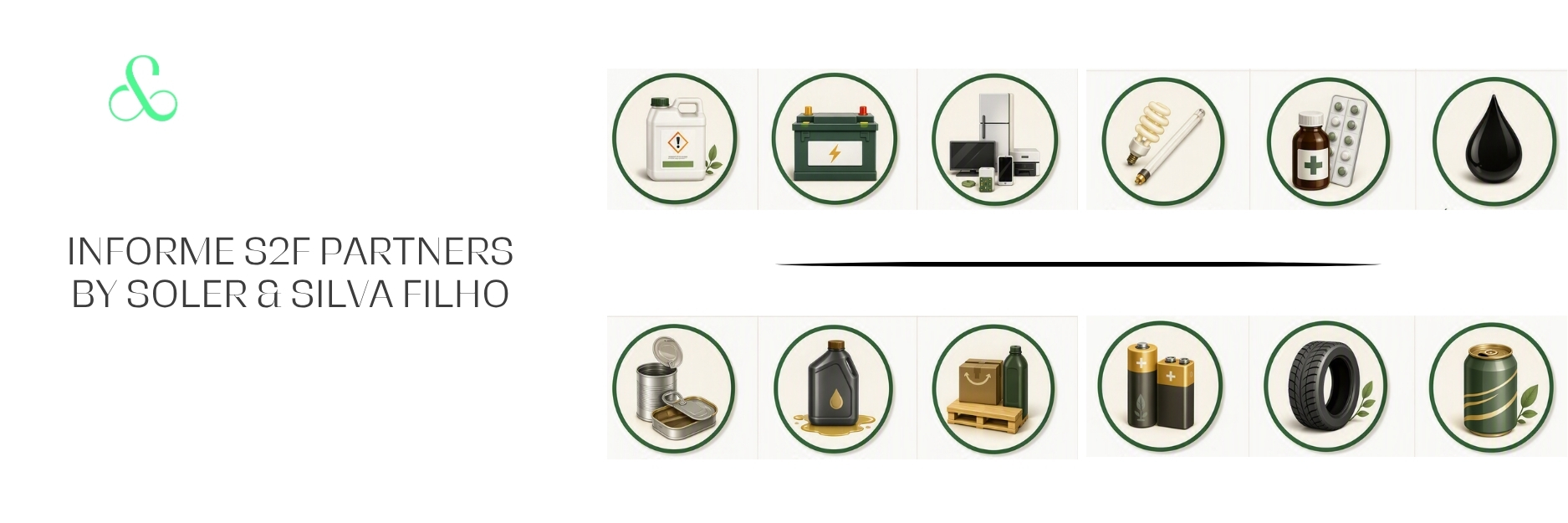
- Batteries; tires; lubricating oils and their packaging; fluorescent, sodium/mercury vapor, and mixed-light lamps; household consumer electronics; expired or disused household medications; and general packaging.
- Trademark holders are deemed equivalent to manufacturers, as are merchants and supermarkets that bottle or package private-label products;
- Other sectors may be called upon to structure Reverse Logistics Systems (SLRs) through a Commitment Agreement or a technical and economic feasibility study bearing a Technical Responsibility Annotation (ART).
SISREV-RJ as the official platform
The Reverse Logistics System of the State of Rio de Janeiro (SISREV-RJ) becomes the official, mandatory tool for receiving, monitoring, and reporting all information related to target compliance—plans, commitment agreements, communication/environmental education plans, and annual reports—only to be replaced in the event of a national system with equivalent jurisdiction.
Instruments and certificates
Reverse Logistics Commitment Agreements (TCLR): entered into between Seas, Inea, and the business sector (via managing entities), containing minimum content defined in Arts. 19-20 and of indefinite duration, subject to review every 5 years;
Reverse Logistics Plans: mandatory registration in SISREV-RJ, either individual or collective, featuring progressive quantitative and geographical targets with a minimum horizon of 5 years; for general packaging, a 5-year structural investment plan is required;
Certificates (CCRLR, CERE, and CCMF): prove compliance with general packaging targets, with statutory priority given to credits backed by mass effectively recovered by waste pickers' cooperatives and associations. The CERE requires a structural project with more than 50% of the target met in partnership with waste pickers. The CCMF is contingent upon a formal TCLR executed with Seas and Inea.
Results verifier
Hiring a results verifier certified by the Ministry of the Environment and Climate Change (via Sinir) becomes mandatory; the verifier is responsible for information custody, validation of electronic tax invoices, and issuance of the annual report. The verifier is prohibited from trading results or negotiating CCRLRs, under penalty of invalidating the issued certificates.
Enforcement and liability
- Equal treatment: the same responsibilities apply across the entire business sector, whether adhering to a TCLR or not;
- Verification and inspection are carried out individually, even for companies operating under a collective model—the managing entity is not liable for individual noncompliance;
- Seas may enter into an agreement with the State Treasury for data-matching on companies operating in Rio de Janeiro, including those headquartered in other states;
- Violations are subject to the penalties of State Laws No. 3,467/2000 and No. 4,191/2003, with conversion of fines permitted under Decree No. 47,867/2021.
Deadlines and key obligations
|
Obligation / Instrument |
Deadline / Milestone |
|
Registration of Reverse Logistics Plans in SISREV-RJ (individual or collective) |
No fixed deadline — effective immediately upon enactment |
|
Base year for calculating geographical and quantitative targets |
2026 |
|
Annual Report (results of the recovery year) |
By July 30 of each year |
|
Geographical targets — coverage across the entire state of Rio de Janeiro |
Progressive, within up to 5 years |
|
Reverse Logistics and Communication/Environmental Education Plans — horizon and updates |
Minimum of 5 years; mandatory review at each five-year cycle |
|
Retention of supporting documentation for targets |
5 years |
|
Registration of the Results Verifier with Sinir/MMA |
Mandatory for both individual and collective models |